top of page


Settlement studies A25


.png)
Baiyora, Dungarpur
organic habitat

This module is meant to be a form of understanding space through field visits to specific places, aimed at inculcating a sense of intuition regarding large-scale settlements. Field visits took place between the 17th and the 21st of January in Baiyora, an Adivasi village located in Rajasthan. Over four days on site, students familiarized themselves with the terrain, landscape, and lifestyle of residents in the area
The Adivasi community identifies itself as among the earliest settlers of the region, with nature worship forming the core of their belief system. Bhedmata is revered as their primary goddess, symbolizing a deep spiritual connection with nature. Cultural practices are closely tied to daily life and livestock; for example, during Diwali, the horns of goats are painted as part of ritual celebrations.
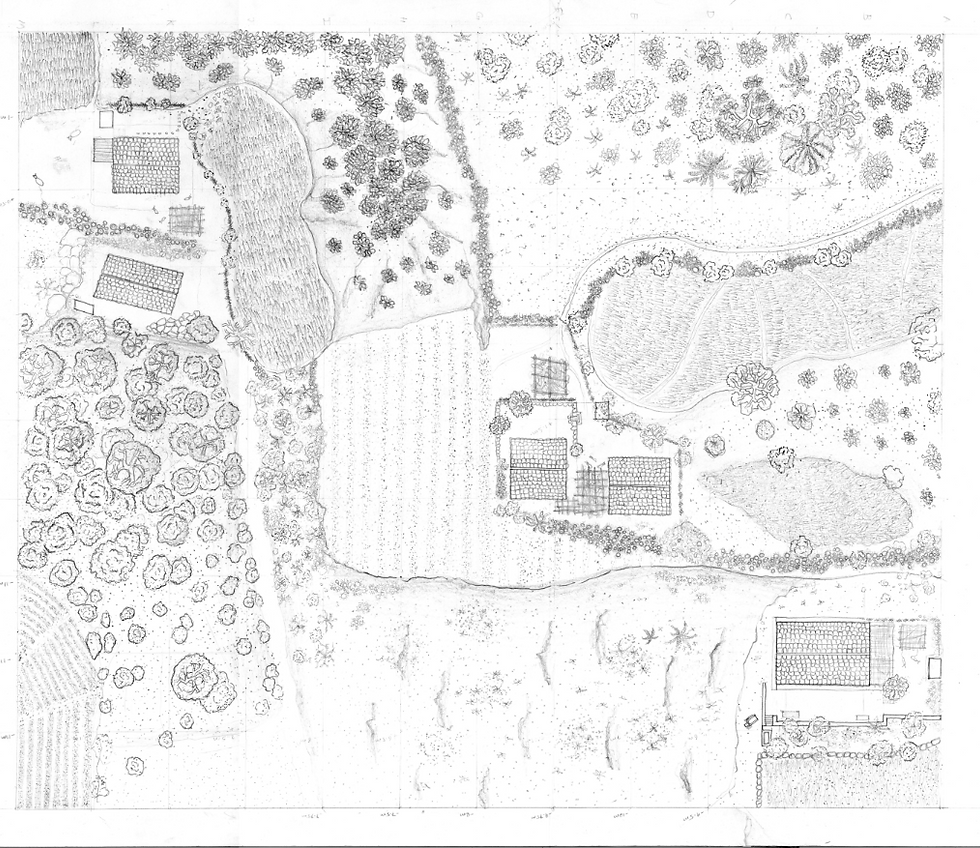
The initial days involved large-scale mapping, such as an overall site plan and elevation diagrams. Simultaneously, groups were made to discern specific cultural traditions, oral histories, and significant historical features of the area. Housing was another notable challenge, using various techniques of measurement to create an accurate reproduction of the exact dimensions. The exercise progressed into bigger drawings, with teams dedicated to elements such as foliage and material usage.
The final submission for the module was a comprehensive axonometric map that located details of the site’s constituent terrain and housing. Students collectively worked on this to ensure geographical accuracy and technical precision
bottom of page