

Settlement studies A25


During our visit, the residents of the houses informed us that, Most houses were self-built by the residents themselves, who invested approximately ₹2–3 lakhs for materials and minimal labour each time a new house was constructed.
Agriculture forms a major part of the villagers’ livelihood. Crops such as corn, mustard, coriander, and chillies are cultivated during the months of June to August. Tukadi and lokvan are grown from March to December; however, these crops are not primarily grown for commercial purposes. They are mainly cultivated for household consumption, and any surplus produce is sold. On average, the villagers produce approximately 10–15 quintals on 4 guntha (approximately 400 square metres) of land, with each guntha yielding around 60–75 kg of produce.


C l u s t e r 4

The houses in Dungarpur were predominantly mud houses, constructed using materials such as red mud, sagwan (teak wood), and, in some cases, concrete. For a generically sized house, the construction period typically ranged between 1.5 to 2 months.
Our site consisted of a particularly specific and unique temple, which had been built by the owner of the house in memory of his daughter, who had died from a snake bite at the age of 12–13 years. This temple holds deep emotional and cultural significance for the family and the surrounding community.
The villagers commonly worship Bhed Maata, a deity whose rituals include animal sacrifice, a practice that has been passed down through generations. The primary language spoken in the village is Wagdi, which varies from place to place. Only a few villagers speak Hindi and Gujarati, and even these languages differ in dialect from the versions familiar to us.
Overall, the village reflects a deeply rooted traditional lifestyle shaped by cultural beliefs, environmental challenges, and generational practices, offering valuable insights into the socio-cultural and ecological realities of the region


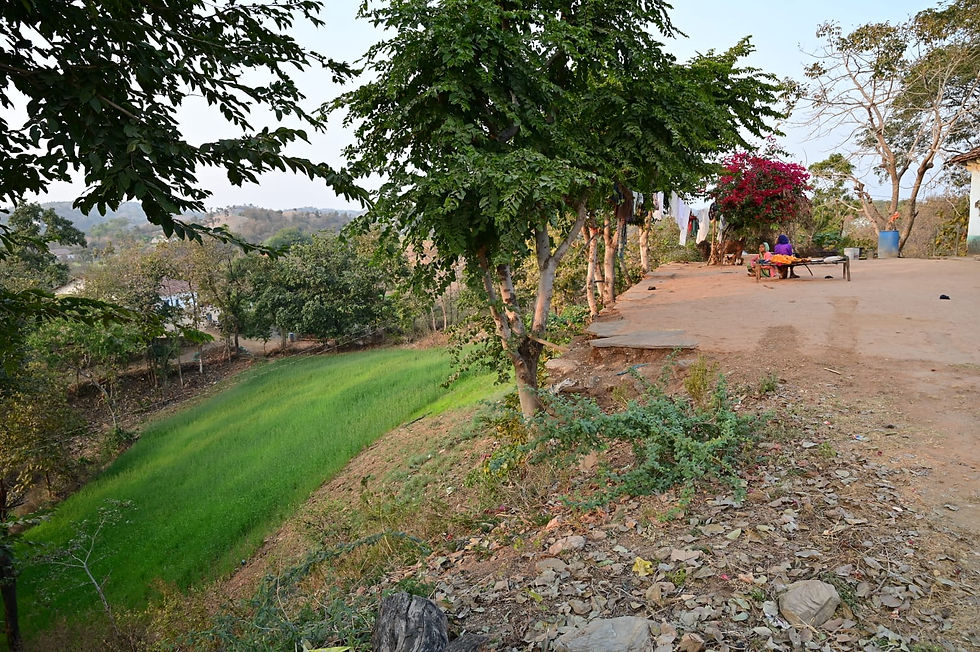
During our visit, the villagers shared that for nearly 20 years, from 2005 to 2025, the region has not experienced significant rainfall. As a result, they have been surviving on extremely scarce water resources. This situation worsened during the COVID-19 period, causing severe hardships. In and around the village, approximately 50 or more wells have completely dried up.
The villagers rear cows, goats, and dogs. Goat milk is preferred for consumption, while cows continue to be used primarily for farming purposes. Houses located close to one another generally belong to members of the same family, and several newer houses have been constructed to accommodate expanding families. Younger sons often migrate to cities such as Ahmedabad in search of better-paying jobs, typically working as watchmen, cleaners, garbage collectors, and in similar occupations.
Women in the village are usually married at an early age, typically between 22 and 23 years. Wedding ceremonies last for 12–15 days and involve distinct and elaborate rituals. During menstruation, women are not permitted to enter the house or cook. Women in this community largely remain within the domestic sphere, spending their days cooking, working on farms, caring for their husbands’ parents, looking after children, and washing clothes.


